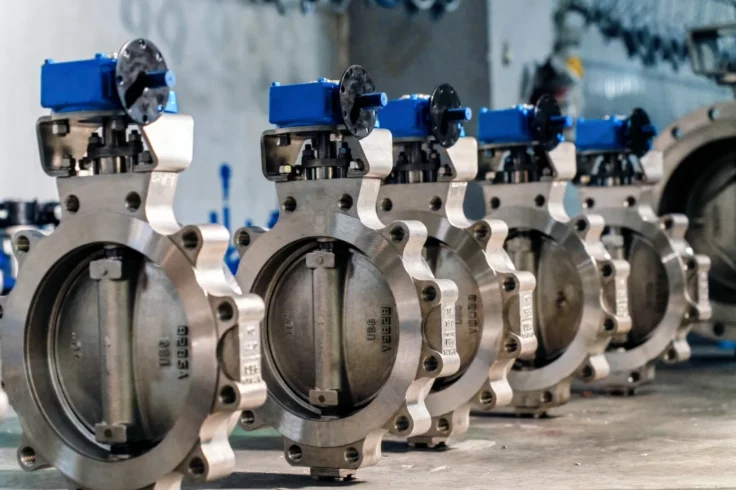
When selecting pipeline valves for industrial processes, different types of valves are often compared. At first glance, butterfly valves may seem simpler and cheaper. However, in aggressive, chemically active, and abrasive environments, pinch valves demonstrate significantly greater reliability and durability, making them a more cost-effective investment in the long run.
Cost vs. Service Life: Why Paying More Makes Sense
Pinch valves usually have an initial cost 20–30% higher than butterfly valves of similar size and purpose. However, it’s important to consider not only the purchase price but the total cost of ownership, including maintenance, repairs, and downtime.
In aggressive and abrasive conditions, pinch valves typically last 2–3 times longer than butterfly valves. While butterfly valves may require repairs or replacement after 12–18 months, pinch valves can operate reliably for 36 to 54 months without significant intervention.
Simple Design — The Key to Reliability and Easy Maintenance
Pinch valves have minimal moving metal parts and feature a rubber sleeve as the main sealing element, which is easy to maintain. This reduces risks of corrosion, friction, and mechanical wear.
Benefits of this design include:
- Fewer wear parts, lowering maintenance frequency and costs;
- Quick access and simple sleeve replacement without disassembling the entire unit;
- No complex adjustments needed, simplifying operator work and minimizing errors.
Resistance to Aggressive, Chemically Active, and Abrasive Media
Pinch valves offer high resistance to:
- Acids and alkalis;
- Abrasive particles in the media;
- High temperatures (up to 150–200°C, depending on sleeve material);
- Mechanical vibration and wear from vibrations.
Modern industrial sleeve materials are designed to withstand chemical and abrasive loads, ensuring long-lasting protection and stable operation under harsh conditions.
Longevity and Reliability — The Key to Cost Reduction
In continuous operation within chemically aggressive and abrasive environments, pinch valves greatly reduce the risk of failures and unexpected repairs.
Case studies:
- At a metallurgical plant, butterfly valves required maintenance every 12 months. After switching to pinch valves, the maintenance interval extended to 4 years, cutting repair and downtime costs by 60%;
- In the chemical industry, where tight sealing in aggressive media is crucial, pinch valves provided leak-free performance for over 3 years, unlike butterfly valves that needed seal replacements every six months.
Conclusion
Pinch valves represent an investment in reliability and cost savings. Despite their higher upfront price, their advantages during operation are clear:
- Extended service life in aggressive and abrasive environments;
- Ease of maintenance and repair;
- Resistance to corrosion and chemical exposure;
- Reduced risk of failures and unplanned downtime.
For industries with demanding operating conditions — metallurgy, chemical, mining — choosing pinch valves is justified by their reliability and economic efficiency.